Science & Research

The research behind the platform

Building the scientific foundation for agentic intelligence in chemistry.

Alchemic was founded by researchers who have spent their careers on catalysis, foundation models, and the question of what it takes to trust an AI result. The work below, on agentic science, AI for heterogeneous catalysis, and transparent reporting for autonomous labs, is the same thinking the product is built on.

Selected publications

Peer-reviewed work from our founders and their collaborators, in Nature Catalysis, Nature Machine Intelligence, Chem Catalysis, ACS Central Science, and The Journal of Physical Chemistry C.

Nature Machine Intelligence

2025
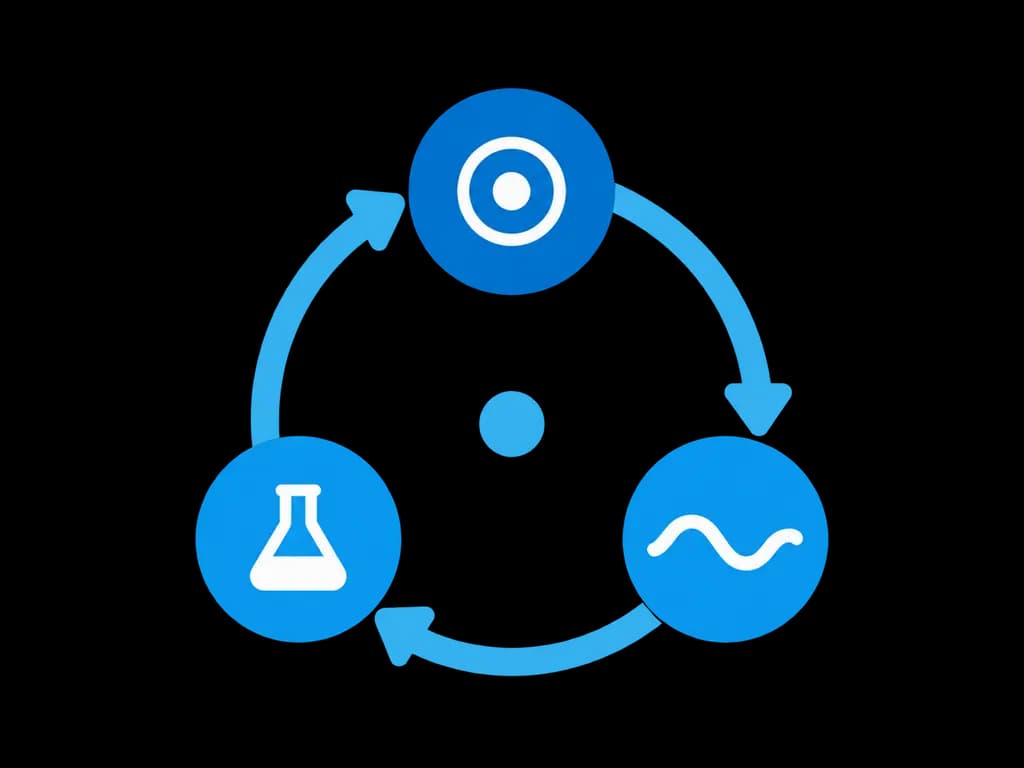
An agent loop closing between a reasoning step, a digital simulation and a physical experiment.

Towards agentic science for advancing scientific discovery

Hongliang Xin, John R. Kitchin, Heather J. Kulik

The framing paper for agentic science: (semi-)autonomous agents that reason, plan, and act across both digital and physical environments. It maps the foundations and frontiers of the field, its current limitations, and the pathways for responsible integration into scientific practice.

Read the paper
Nature Catalysis

2026

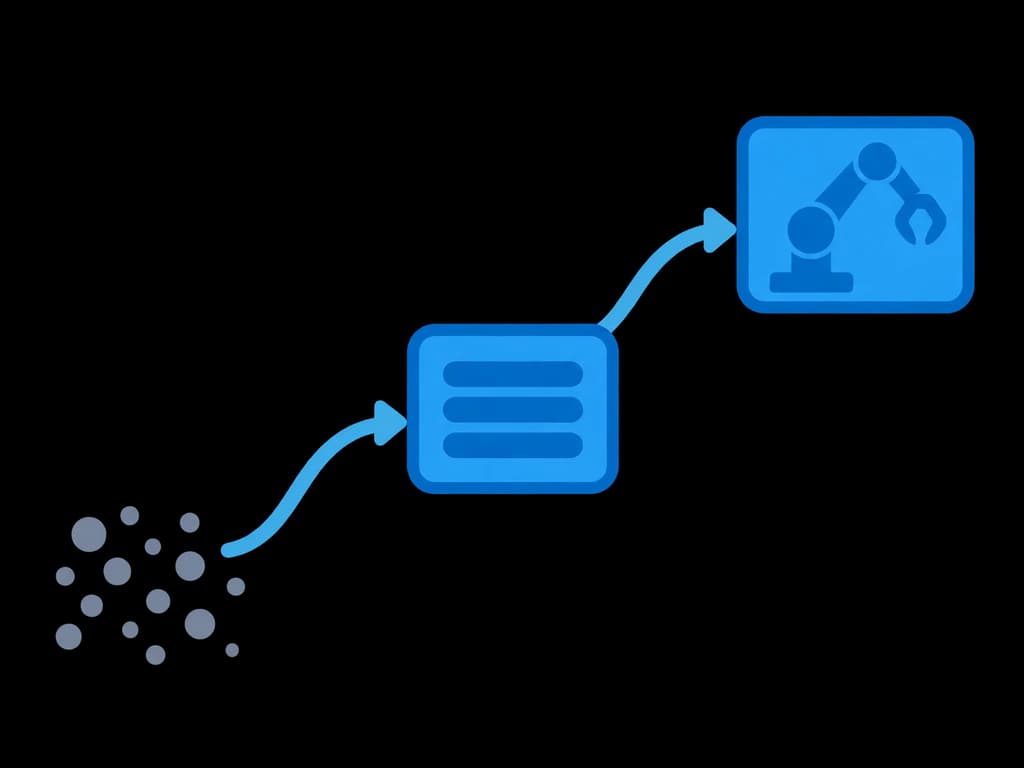
A path rising through three stages: scattered data, a unified model, and an autonomous lab.

Roadmap for transforming heterogeneous catalysis with artificial intelligence

Hongliang Xin, John R. Kitchin, Núria López, Neil M. Schweitzer, et al.

A community roadmap for deeply integrating AI into heterogeneous catalysis. It names the barriers honestly: limited data availability and quality, weak generalizability and interpretability, and the persistent gap between in silico predictions and experiment. It then lays out the path through them, from an AI-ready data ecosystem to multimodal foundation models and ultimately autonomous laboratories built on human–machine collaboration.

Read the paper

Chem Catalysis

2026

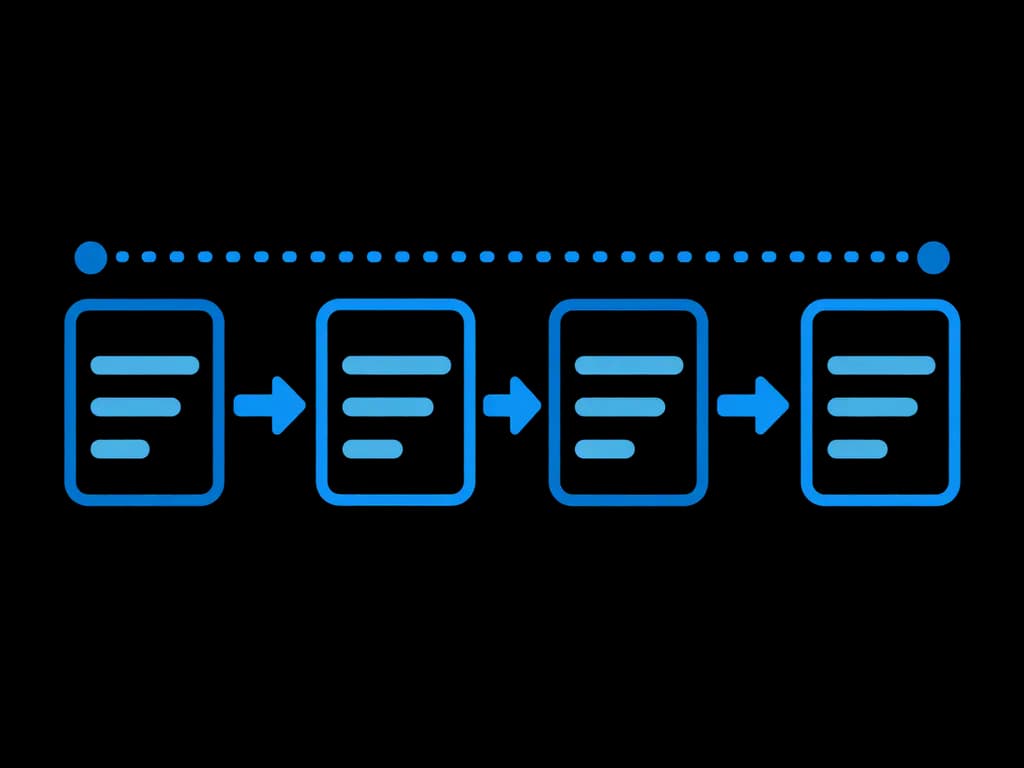
A chain of linked records tracing a query through data, model, action, and result.

Transparent reporting for agentic catalysis enabled by artificial intelligence: Community guidelines and a publication checklist

Hongliang Xin, John R. Kitchin, Núria López … Marc D. Porosoff, et al.

TRACE-AI is a community standard for reporting agentic catalysis work. Closed-loop AI introduces new sources of variability that can undermine rigor and reproducibility, especially in heterogeneous catalysis, where subtleties in synthesis, activation, and testing move outcomes. The guidelines and checklist require end-to-end traceability: scientific query, to data and models, to reasoning and actions, to the knowledge acquired.

Read the paper

ACS Central Science

2026

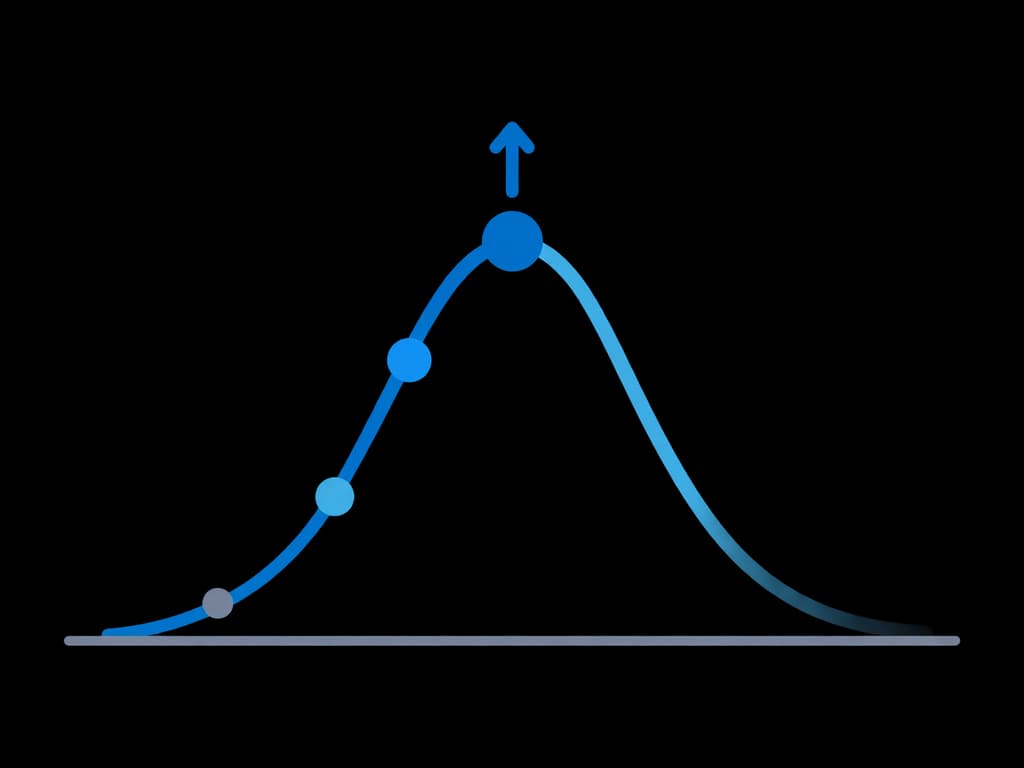
An optimization curve narrowing onto a peak across a few labelled iterations.

Bayesian Optimization of Catalysis with In-Context Learning

Mayk Caldas Ramos, Shane S. Michtavy, Andrew D. White, Marc D. Porosoff

BO-ICL extends in-context learning from classification to regression with uncertainty estimation using frozen LLMs, enabling Bayesian optimization directly in natural language, with no weight updates and no feature engineering. Materials are represented as their synthesis and testing procedures. It matches or beats Gaussian processes on aqueous solubility and oxidative coupling of methane, and in live reverse water–gas shift experiments it found multimetallic catalysts approaching equilibrium CO yield within 6 and 10 iterations, from candidate pools of 3,700 and 360,000.

Read the paper

The Journal of Physical Chemistry C

2026

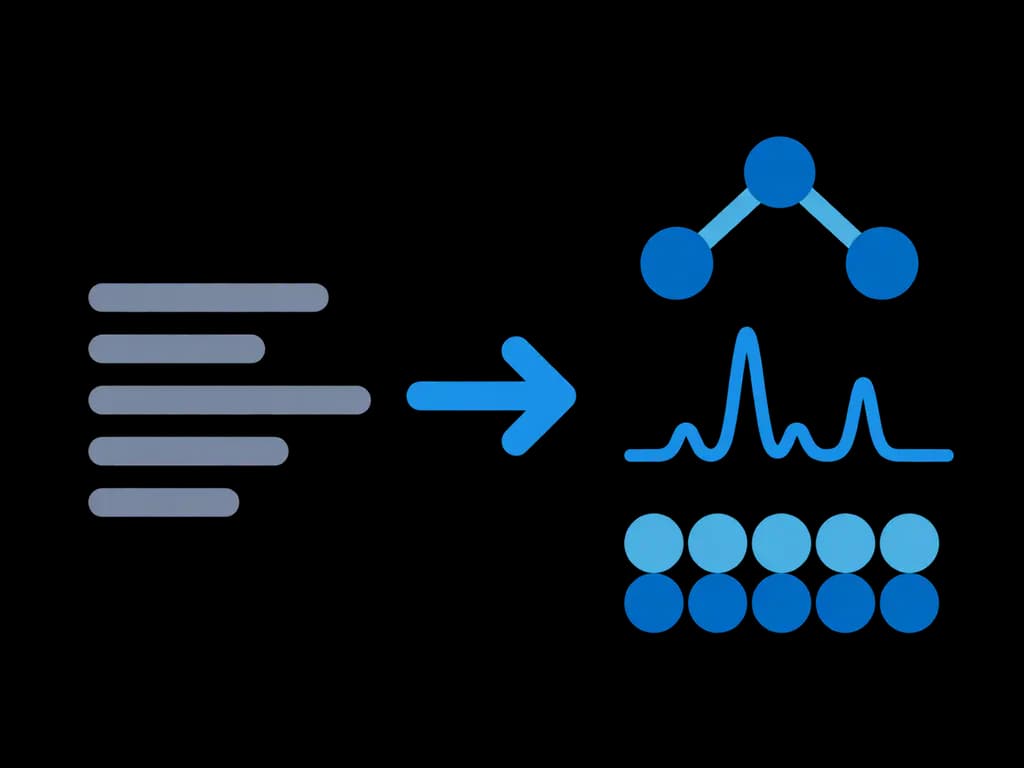
Lines of text converging into a catalyst surface, a spectrum, and a reaction diagram.

Leveraging Large Language Models for Understanding Fundamental Principles of Catalysis

Shane S. Michtavy, Sinhara M. H. D. Perera, Marc D. Porosoff

Catalysis data sets are small, inconsistently reported, and split across performance measurements, spectroscopy, and mechanistic models at different scales. This perspective argues that language is the unifying representation across those modalities, and develops three opportunities where LLMs contribute: text to properties, text to structure, and text to mechanistic models.

Read the paper

From research to product

Three threads run through the work above, and each one maps directly onto a piece of the platform.

Agentic science

Agents that reason under constraints, plan, and execute experiments, both in silico and physical, with minimal human intervention. Our founders helped define the field's framing and its open problems.

Agentic Labs

Language as a representation of matter

Procedures, spectra, and mechanisms live in text. Treating language as the common representation makes dispersed experimental results usable by models, and makes optimization possible without hand-built features.

Scientific Foundation Models

Traceability and reproducibility

Autonomous loops introduce new sources of variability. We build to the standard our founders co-authored: every campaign traceable from scientific query to data, models, reasoning, actions, and the knowledge acquired.

Data Infrastructure

In progress

A core focus is quantifying AI advantage: measurable speedups, improved predictive power, and scaling metrics that show how performance compounds with more data and compute. We publish this work as it is ready rather than ahead of it.

Benchmarks & scaling metrics

Quantitative evaluation of AI advantage across molecular property prediction, reaction outcome forecasting, and formulation optimization, plus scaling analyses showing how predictive power and discovery speedup improve with more data, compute, and experimental integration. Publishing as results are ready.

Technical notes

In-depth explorations of the platform: knowledge-graph construction and evidence scoring, model architecture and uncertainty calibration, and the design of closed-loop experimental campaigns. Publishing as they are completed.

Interested in collaborating on research?

We welcome research partnerships with national laboratories, universities, and industry collaborators in foundation models, scientific knowledge systems, and agentic experimentation for chemistry and materials.